




— Our perspective
Committed professionals
When a person needs to access a specialist addiction treatment service — whether for alcohol, cocaine, cannabis, psychoactive medication or other substances — for themselves, a relative or someone close to them, they often do not know where to turn. Unlike other needs, such as finding a lawyer or a dentist, where people usually rely on trusted recommendations, word of mouth is not as effective when it comes to addictions. This is largely because both those affected and their families tend to keep the fact that they are receiving treatment private. In this situation, Fundación Salud y Comunidad, backed by more than 25 years of experience supporting thousands of people with substance use problems, offers guidance to those searching for specialist resources to begin appropriate treatment.
Today, one of the most accessible and confidential ways of obtaining information about addiction treatment is through the internet. Although it is also possible to go to professionals such as a family doctor or social workers, many people choose to search directly online. Using terms such as “addiction treatment” or “detox centres” on search engines like Google, it is common to find a large number of options, including specialist centres, private clinics and independent professionals. However, experience shows that people who carry out these searches often feel disoriented, finding it hard to tell the options apart, since many have very similar characteristics. This uncertainty, added to the worry caused by a situation of problematic substance use — their own or a loved one’s — intensifies emotional distress and the urgency to make the right decision. The need to choose a suitable resource thus becomes an additional source of anguish for people who are already going through a delicate time.
For this reason, Fundación Salud y Comunidad, backed by more than 25 years of experience supporting thousands of people with addiction problems, offers guidance to those who are searching for suitable treatment. The aim is to make it easier to access specialist resources and to provide clear, useful information to help people make decisions at an especially delicate time.
— Our advantages
What types of resources are available for people who need treatment for addiction?
There is a wide range of private treatment options, including centres with a long-established and recognised track record, as well as more recently created ones whose experience is limited. Some of the latter are run by people in recovery from their own addictions, who do not always have the health and psychological training needed to deal with disorders of this complexity. In many cases, these private centres make admission to a residential facility a condition of treatment. The associated costs are usually high and, as these are non-subsidised services, they do not have the backing or direct oversight of the public authorities.
The public network for drug dependence care of the Generalitat de Catalunya, made up of the Care and Follow-up Centres (CAS), offers free treatment and is staffed by professionals with solid training and extensive experience in tackling addictions. These facilities provide quality services, although in some cases limited resources and high demand make it difficult to offer the promptness and frequency of care that this type of disorder may require.
Third-sector organisations, made up of non-profit entities specialising in addiction treatment, are another alternative within the care system. These are resources run by professionalised NGOs and supervised by the public administration. However, these organisations tend to operate with limited means, in terms of both infrastructure and staff, because of the budget restrictions that habitually affect the social sector.
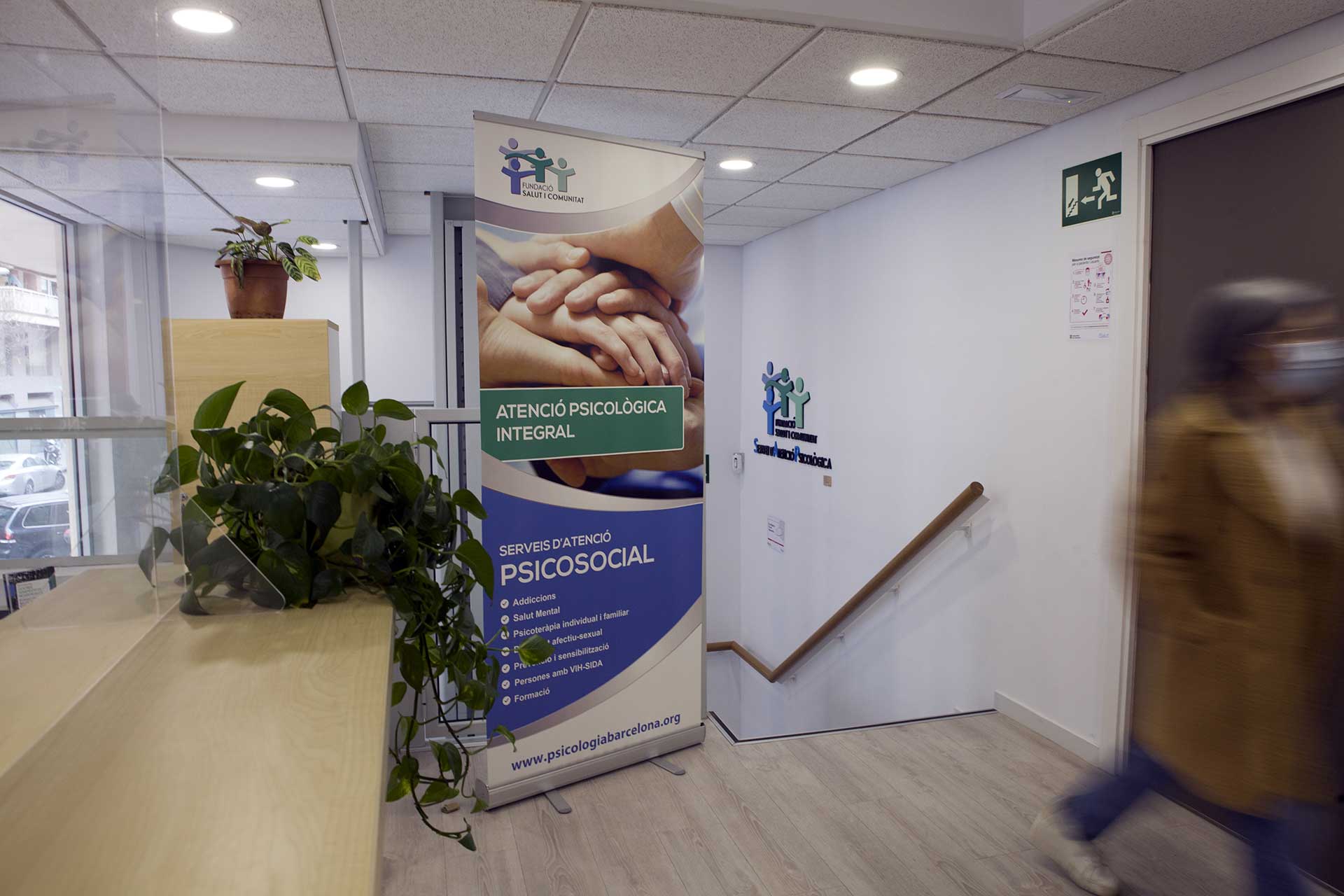
Fundación Salud y Comunidad (FSC) is an addiction treatment option that combines the promptness of care and level of comfort of private services with the professionalism and quality standards that characterise the public network. All this at an affordable cost for service users and, in many cases, with public funding that allows subsidised access to the different resources available.