



ALCOHOLISM
Alcohol consumption in Spain
Spain has a long winemaking tradition and is one of the world’s main producers and consumers of alcoholic drinks. Alcohol is considered the most widely consumed legal drug in the country: close to 80% of adults aged 15 to 64 report drinking it, with higher intake among men than among women. The age at which people start drinking is worryingly young, averaging around 16. In addition, one in ten adults say they drink daily, and two in five men aged 15 to 34 admit to having been drunk at least once in the past year, which shows how normalised drinking has become and the need to strengthen prevention policies.
Binge drinking refers to excessive alcohol intake over a short period of time — the equivalent of five or more drinks for men or four or more for women. This harmful pattern of consumption is concentrated mainly among young adults aged 20 to 29, although it already affects around 15% of the adult population, with a worrying upward trend. This type of drinking increases the risk of health problems, accidents and risk-taking behaviour, which is why preventing it is a priority in public health strategies.
Effects of alcohol on our bodies
Alcohol is a depressant drug of the central nervous system that works by progressively inhibiting brain functions and affecting self-control, coordination and judgement. Ethanol, or ethyl alcohol, is its main component, and its concentration varies depending on how each drink is made. Alcoholic drinks can be classified as fermented, such as wine, beer or cider, and distilled, such as whisky, gin or rum, among others. The alcohol content of the latter is significantly higher, which increases their potential for physical and psychological harm if consumed in excess
Alcohol drunk in beverages is absorbed in the digestive system and passes quickly into the bloodstream, where it can remain for up to 18 hours before being eliminated by the liver. This organ is mainly responsible for metabolising ethanol, but its continued overload has serious consequences for health. The prolonged presence of alcohol in the body and its repeated consumption are responsible for most of the damage associated with abuse of this substance, including cirrhosis of the liver and various forms of encephalopathy, in which the functioning of the liver and the brain is seriously affected.
A few minutes after drinking alcohol, its immediate effects begin to appear, notably disinhibition, euphoria, relaxation and increased sociability. These symptoms can lead people to mistake alcohol for a stimulant drug, when in fact it is a depressant of the central nervous system. At the same time, difficulty speaking, problems with motor coordination, mental slowness and, in cases of excess, acute intoxication appear. The effects of alcohol vary not only according to the amount consumed, but also according to each person’s age, sex and body weight, factors that directly influence tolerance and the associated risks.
In the short term, alcohol abuse carries serious risks to health and personal safety. Its most immediate consequences include: Alcohol poisoning, which in extreme cases can lead to alcoholic coma and even death. Increased risk-taking behaviour, as alcohol lowers inhibitions and creates a false sense of safety. This translates into a greater likelihood of road or workplace accidents, as well as of engaging in risky sexual practices. Recognising these early effects is key to preventing alcohol misuse and its potentially fatal consequences.
In the long term, alcohol misuse causes serious consequences for physical, mental and social health, as well as giving rise to family and work conflicts. These effects can appear even in people who have not developed a dependence. The main consequences of prolonged alcohol abuse include aggression, sleep disturbances, depression, cognitive decline, sexual dysfunction, cirrhosis of the liver, encephalopathies, various types of cancer, as well as dementia and psychosis. Continued drinking progressively affects the brain, liver and nervous system, compromising quality of life and increasing the risk of premature death.
Risky alcohol consumption
Although the World Health Organization (WHO) states that there is no “safe” amount below which there is no risk, three categories of drinkers are established according to the amount consumed and sex. The standard drink unit (UBE) is used to calculate the amount of alcohol consumed:
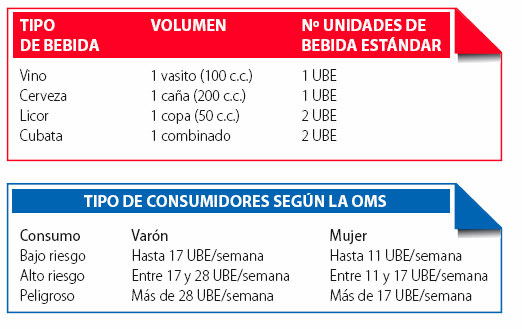
In Spain, it is estimated that around 12.2% of men and 4.9% of women are high-risk drinkers, while 5% of men and 2.3% of women are considered hazardous drinkers, according to the most recent data on alcohol consumption. The most serious consequence of excessive and continued alcohol consumption is alcohol dependence disorder, commonly known as alcoholism. This chronic illness is characterised by uncontrolled drinking that damages physical and mental health and seriously affects the family, work and social life of the person concerned. Recognising the early signs and seeking professional help are fundamental steps in preventing progression to dependence.